
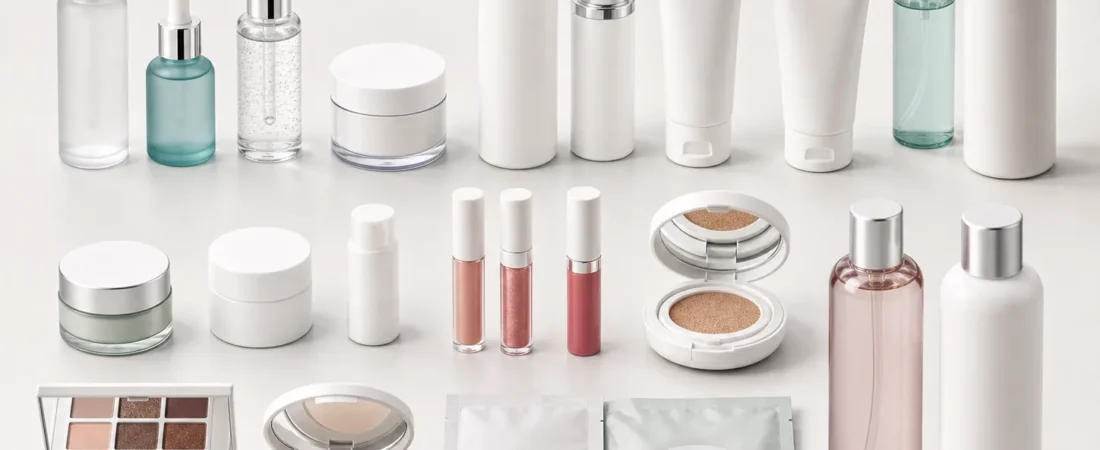
For B2B cosmetic buyers, choosing a private label manufacturer is not only about the lowest unit price. A good supplier should help you control formula risk, packaging decisions, sample timing, documentation and production handover. This checklist is written for brand owners, importers, distributors and sourcing teams who need a practical way to compare OEM/ODM cosmetics partners before sending a purchase order.
1. Start with a clear product brief
Before asking for a quote, define the product category, target market, expected first order quantity, packaging direction and launch channel. A serum for Amazon, a salon body care line and a retail gift set require different decisions, even if the supplier can produce all three.
- Product type and format: cleanser, serum, cream, lip oil, balm, body lotion, sachet or set.
- Target customer and selling channel: DTC, Amazon, spa, retail chain, distributor, hotel amenity or salon.
- Benchmark product: texture, viscosity, finish, scent level, shade or packaging reference.
- Destination market: US, EU, UK, Canada, Middle East or another region with specific label and claim expectations.
- Commercial range: expected retail price, first order quantity, reorder plan and launch date.
If the brief is still early, review the current private label cosmetics product range first and narrow the project to one or two hero categories.
2. Choose the right formula route
Many buyers ask for a custom formula when a semi-custom or ready-base route would be faster and more cost-effective. The right route depends on how much differentiation you need and how much development risk your timeline can accept.
| Formula route | Best fit | What to check |
|---|---|---|
| Ready base | Fast launches, test orders, simple SKU extensions | Available texture, scent, active story, pack compatibility and MOQ |
| Semi-custom | Brands that need a recognizable positioning without long R&D | Allowed adjustments, sample rounds, added cost and stability considerations |
| Custom formula | Hero products, ingredient-led concepts and differentiated claims | Development timeline, benchmark match, testing scope, regulatory review and bulk batch risk |
For skincare projects, buyers usually compare texture, absorption, finish and hero ingredient direction. For color cosmetics, shade work, payoff, applicator and component fit become more important. You can explore related routes on the private label skincare and private label makeup pages.
3. Check packaging before judging MOQ
MOQ is rarely just one number. It can be driven by formula batch size, bottle or tube MOQ, decoration method, carton printing, shade count, set assembly and testing requirements. A supplier that explains these drivers is easier to work with than one that only sends a number without assumptions.
- Stock packaging usually supports faster sampling and lower starting risk.
- Custom color components or custom molds can increase MOQ and lead time.
- Printed tubes, silk screen bottles and hot-stamped caps may have separate supplier minimums.
- Gift boxes, inserts and multi-SKU sets add packing labor and artwork coordination.
- Compatibility between formula and packaging should be discussed before bulk production.
If packaging is still open, compare the main options on the cosmetic packaging page before asking for final pricing.
4. Request the right documents early
Documentation should not be left until the shipment is ready. For B2B buyers, early document planning helps with label review, importer checks, retail onboarding and internal approval.
- INCI ingredient list: needed for label review and market checks.
- Product specification: appearance, odor, color, pH, viscosity, fill volume and other agreed parameters.
- COA: batch-level quality summary based on the agreed specification.
- SDS or MSDS support: useful for handling, warehouse or forwarder requests when applicable.
- Artwork dielines: bottle, tube, label, carton or pouch dimensions for design teams.
- Packing information: carton size, gross weight, net weight, carton marks and packing photos.
For a deeper planning list, use the cosmetic compliance documents guide.
5. Compare suppliers beyond unit price
Unit price matters, but it should be compared with scope. A quote that includes packaging sourcing, sample adjustment, artwork support and document preparation may be more useful than a lower price with unclear exclusions.
- Does the supplier understand your product category and channel?
- Can they explain sample timing and what feedback is useful?
- Do they support both formula and packaging decisions?
- Can they share realistic MOQ drivers instead of a vague minimum?
- Are quality checks, batch records and packing details discussed before production?
- Do they communicate clearly about what is included, optional or buyer-side responsibility?
6. Use a complete RFQ checklist
A complete RFQ saves time for both sides and usually leads to a more useful quotation. Send enough information for the manufacturer to recommend the right route rather than guessing your requirements.
| Include in the RFQ | Why it matters |
|---|---|
| Product category and target format | Helps identify formula base, equipment and packaging options |
| Benchmark or reference product | Reduces misunderstanding around texture, finish, shade or scent |
| Target market and claims direction | Supports label, ingredient and document discussion |
| Expected first order quantity | Helps match MOQ, packaging route and production assumptions |
| Packaging preference | Controls component sourcing, decoration and compatibility checks |
| Launch timeline | Shows whether ready base, semi-custom or full custom development is realistic |
The sample and RFQ process page explains how to move from first inquiry to sample approval and pre-production confirmation.
7. Watch for practical red flags
- The supplier quotes before understanding formula route, packaging or quantity.
- MOQ is presented as fixed, but no reason is given for the minimum.
- Sample feedback is treated casually, with no clear approval record.
- Packaging compatibility and artwork dimensions are discussed too late.
- Document support is vague or only mentioned after the order is placed.
- The project timeline ignores packaging lead time, sample rounds or pre-production checks.
A practical next step
If you are comparing private label cosmetics manufacturers, prepare a short brief with product type, target market, first order quantity, packaging direction and benchmark reference. Mirun Cosmetic can then help you choose a realistic formula route, product range and sample plan before you commit to bulk production.